
Nutrition · Extra Virgin Olive Oil · Polyphenols

Olive Oil Polyphenols: What They Are, Why They Matter and How They Differ from Antioxidants

Extra Virgin Olive Oil is valued not only for its monounsaturated fats and flavor, but also for a complex group of naturally occurring plant compounds known as polyphenols.

Understanding the science

Antioxidants and polyphenols are related, but they are not the same thing

Antioxidants are compounds that can help limit oxidative reactions by interacting with reactive molecules commonly referred to as free radicals.

Polyphenols are a broad family of plant compounds, many of which display antioxidant activity. In Extra Virgin Olive Oil, these compounds contribute not only to its chemical stability but also to its bitterness, aroma and characteristic peppery finish.

Their presence is one of the factors that distinguishes high quality Extra Virgin Olive Oil from more heavily refined olive oils.

Polyphenols are not simply a nutrition trend. They are part of the chemistry, flavor and identity of genuine Extra Virgin Olive Oil.

Oxidative Stress

What does oxidation mean in the human body?

Oxidation is a normal part of human metabolism. During many biological processes, reactive oxygen species are produced naturally.

Under normal circumstances, the body maintains a balance between these reactive molecules and its own antioxidant defenses.

When that balance shifts and reactive molecules accumulate beyond the body's ability to regulate them, the result is referred to as oxidative stress.

Where antioxidants fit in

Antioxidants are molecules capable of interacting with reactive species and limiting oxidative reactions.

They include compounds obtained from food as well as antioxidant systems produced naturally by the human body.

The antioxidant activity of olive oil is linked in part to its phenolic fraction, which contains several compounds specific to olives and olive oil.

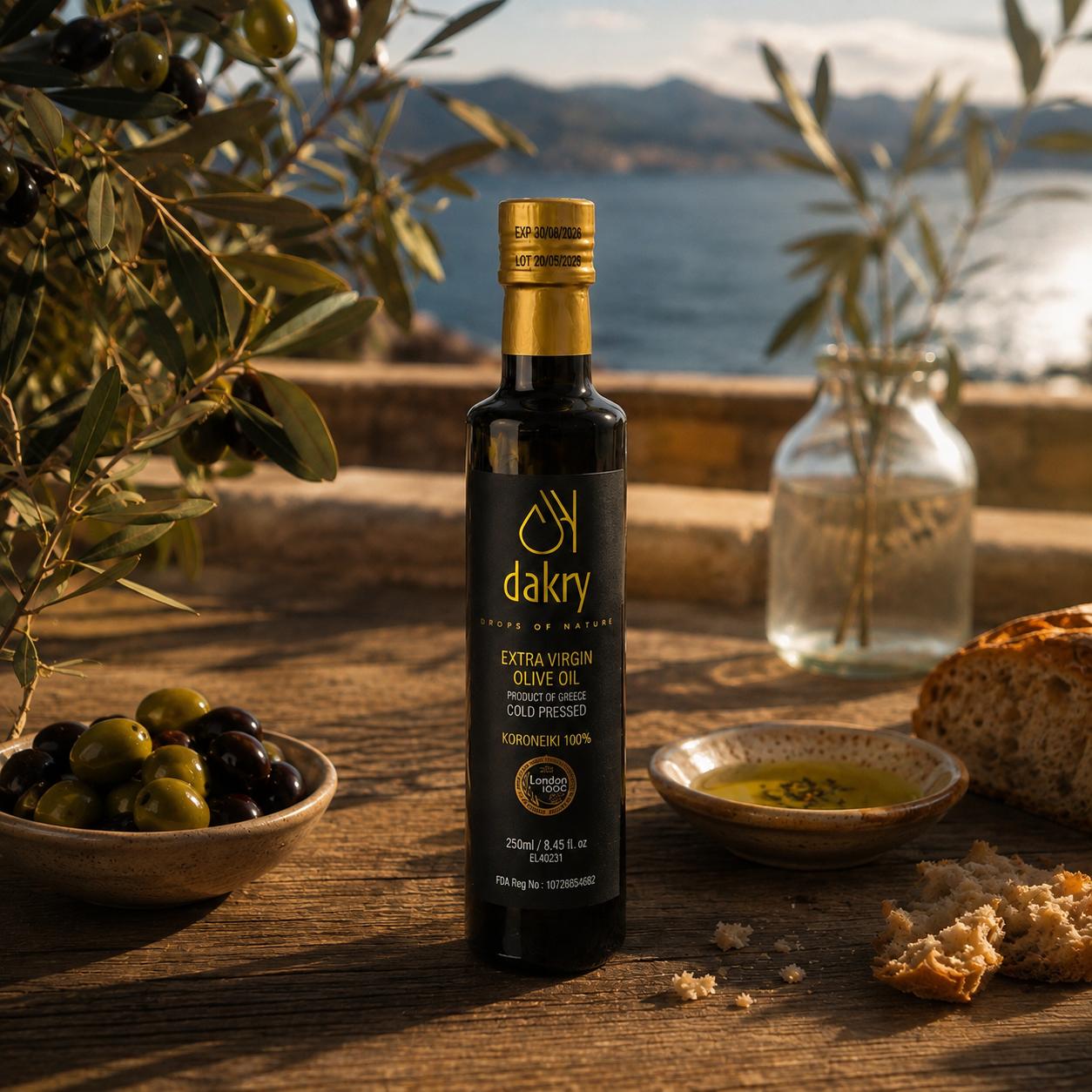
Dakry Extra Virgin Olive Oil 750ml from Messinia
Dakry · Messinia

Extra Virgin Olive Oil begins with the fruit, the land and the harvest

Every stage from olive variety and ripeness to extraction and storage can influence the phenolic profile, aroma and sensory character of the final oil.

Key olive phenolics

The compounds most often discussed in Extra Virgin Olive Oil

Olive oil contains a complex range of phenolic compounds. Their concentrations differ according to cultivar, harvest, processing and storage.

01

Hydroxytyrosol

Hydroxytyrosol and its derivatives are among the most studied olive phenolics and are central to the authorised European health claim relating olive oil polyphenols to protection of blood lipids from oxidative stress.

02

Oleuropein derivatives

Oleuropein related compounds originate from the olive fruit and contribute to the bitter and complex sensory profile associated with fresh, carefully produced olive oil.

03

Oleocanthal

Oleocanthal is a phenolic compound associated with the characteristic peppery throat sensation found in some high quality Extra Virgin Olive Oils and remains the subject of active scientific research.

From grove to bottle

What influences polyphenol levels in olive oil?

Polyphenol concentration is not fixed. It changes according to agricultural conditions, olive maturity, extraction and storage.

Olive variety Different cultivars naturally produce different phenolic profiles.
Stage of ripeness Earlier harvested olives can often produce oils with stronger bitterness, pungency and higher phenolic intensity.
Climate and growing conditions Temperature, rainfall, irrigation and local environmental conditions influence the fruit and its chemistry.
Extraction process Time, temperature and milling conditions influence how phenolic compounds are retained in the finished olive oil.
Oxygen, light and heat Exposure during storage gradually affects both sensory quality and antioxidant compounds.
Freshness Polyphenol levels evolve over time, which makes proper storage and timely consumption important for quality.
What the European health claim actually says

A specific claim, with specific conditions

European regulations allow the statement that olive oil polyphenols contribute to the protection of blood lipids from oxidative stress.

This claim applies only to olive oils that contain at least the required amount of hydroxytyrosol and its derivatives, and the beneficial effect is linked to a daily intake of 20 g of qualifying olive oil.

Not every Extra Virgin Olive Oil automatically meets the threshold required for this authorised claim.

Cooking with Extra Virgin Olive Oil

What happens to polyphenols when EVOO is heated?

Heat can reduce some phenolic compounds, particularly when cooking is prolonged or performed at higher temperatures.

That does not mean Extra Virgin Olive Oil becomes unsuitable for cooking. Its high proportion of monounsaturated fatty acids and naturally occurring antioxidants contribute to its oxidative stability.

Research also suggests that during cooking, some olive oil phenolics may migrate into the foods being prepared. The final nutritional profile therefore depends on the cooking method, temperature, duration and the food itself.

For the fullest expression of aroma, bitterness and peppery character, high quality Extra Virgin Olive Oil can also be enjoyed raw as a finishing oil.

Dakry Extra Virgin Olive Oil

Discover the taste of Messinia

Dakry Extra Virgin Olive Oil 750ml brings together Messinian origin, carefully selected olives and a balanced fruity character in an elegant bottle designed for both the kitchen and the table.

Discover the 750ml EVOO
Dakry Olive

From Methoni, Messinia. Rooted in the land. Refined by knowledge.

Estate olive oil

Our extra virgin olive oil comes from our family groves in Methoni, Messinia. Olives are milled within four hours of harvest.

Gold Award · London Olive Oil Competition
Quality Contest 2025

Explore our olive oil

Across borders

Shop online for delivery within the United States. Wholesale and bespoke orders are available across 22 countries by arrangement.

International gifting starts with a conversation. Contact us to discuss your destination.

Enquire about bespoke gifting

Traceable Greek origin

Our extra virgin olive oil is traceable by batch, from our family groves to bottling.

Batch documentation is available on request. Please include the lot number shown on your bottle.

Request batch details