
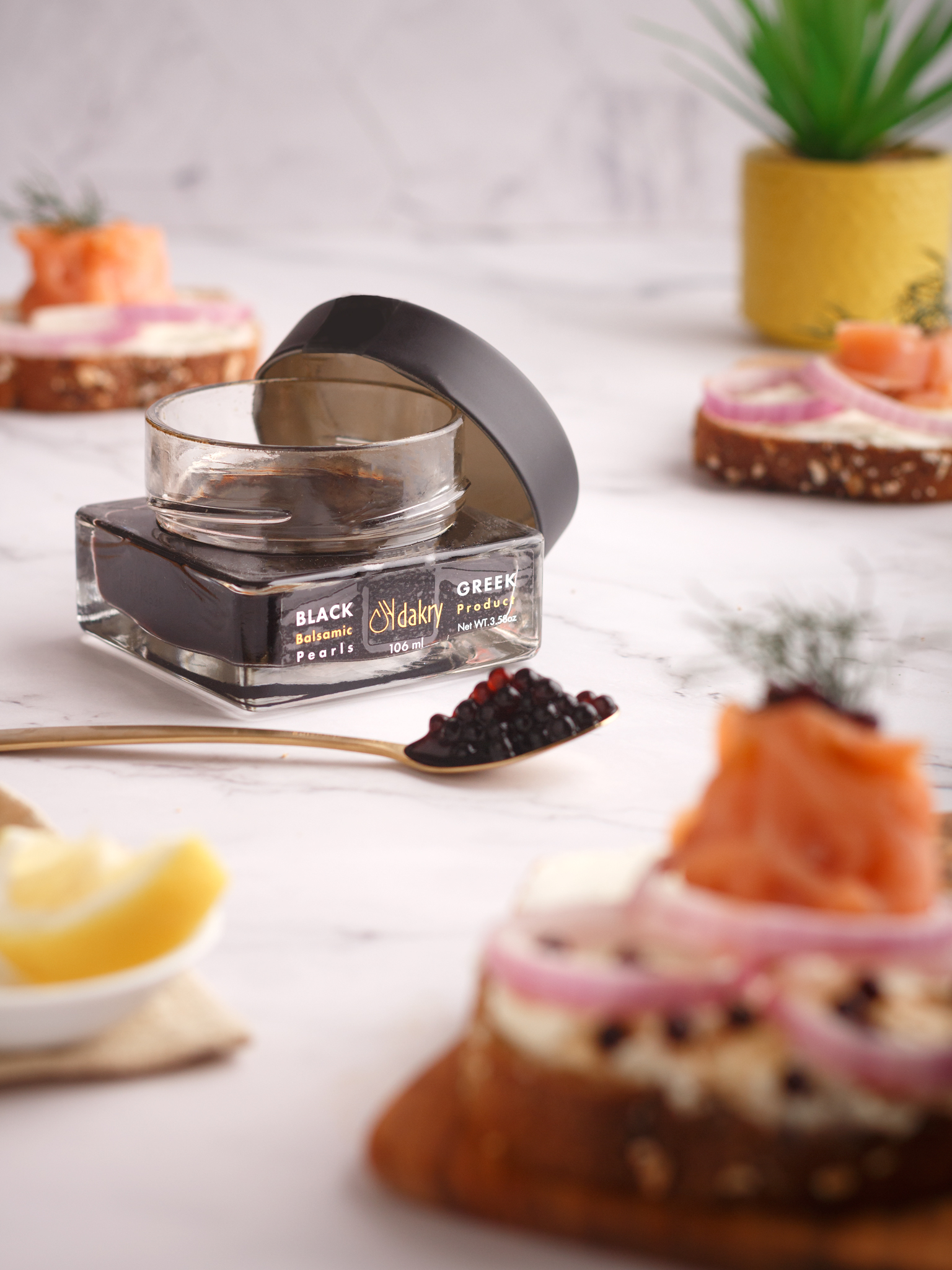
Dakry Balsamic Pearls contemporary Mediterranean gastronomy
Dakry Balsamic Pearls · Contemporary Mediterranean Gastronomy
Balsamic Vinegar · Fermentation · Modern Gastronomy

Balsamic Vinegar: From Tradition to the Modern Art of Balsamic Pearls

Deep acidity, natural sweetness and centuries of culinary tradition meet contemporary gastronomy in one of the Mediterranean table's most expressive ingredients.

Understanding balsamic

More than acidity. More than a finishing vinegar.

Balsamic vinegar begins with grapes and develops its characteristic balance of sweetness, acidity, aroma and depth through processing, fermentation and, depending on the style, maturation.

Its culinary appeal lies in contrast. A small quantity can introduce acidity to rich foods, sweetness to savory preparations and depth to otherwise simple ingredients.

Today, contemporary gastronomy has found new ways to interpret this familiar flavor, including spherification and the creation of delicate balsamic pearls.

Tradition gives balsamic its identity. Technique gives it a new form.

From Grape to Flavor

What is balsamic vinegar?

Balsamic vinegar is traditionally connected with grape must, the freshly crushed juice of grapes that includes naturally occurring sugars and aromatic compounds.

Different production methods create very different styles, from accessible everyday balsamic vinegars to highly concentrated and matured traditional expressions.

Fermentation and transformation

During vinegar production, microorganisms transform alcohol into acetic acid. This process creates the characteristic acidity that defines vinegar.

Aging and concentration can further influence aroma, viscosity, sweetness and complexity, but longer aging should not automatically be translated into exaggerated health claims.

What about polyphenols?

Grapes naturally contain polyphenolic compounds, and some remain present in balsamic vinegar. Their levels vary significantly according to raw material, processing and product type.

Balsamic vinegar should therefore be appreciated primarily as a culinary ingredient with distinctive sensory character, rather than promoted as a treatment for disease.

What matters

Four things worth knowing about balsamic vinegar

Quality balsamic is best understood through ingredients, flavor, production and how it is used at the table.

01

A little can go a long way

Concentrated acidity and sweetness mean that a relatively small quantity can provide significant flavor impact.

02

Ingredient lists matter

Balsamic products differ widely. Reading the ingredient list helps distinguish vinegar from heavily sweetened sauces and balsamic style creams.

03

Acidity creates balance

Balsamic can cut through fat, brighten cheese, complement vegetables and create contrast in both savory and sweet preparations.

04

Sulphites require attention

People with known sulphite sensitivity should always check the product label rather than assume a vinegar is automatically suitable for them.

05

Texture changes perception

Presenting balsamic as a pearl rather than a liquid changes when and where the acidity reaches the palate.

06

It belongs beyond salads

Cheese, seafood, meats, roasted vegetables, desserts and cocktails can all benefit from carefully controlled balsamic acidity.

The contemporary interpretation

From liquid balsamic to Greek Caviar

Through spherification, liquid flavor can be enclosed inside a thin membrane, creating small spheres that remain intact until they reach the palate.

Dakry Balsamic Pearls reinterpret Mediterranean flavors through this modern culinary technique, allowing acidity, sweetness and visual presentation to be placed precisely where the dish needs them.

The collection currently includes Black, Lemon, Pomegranate and White Balsamic Pearls, each presented in a 106 ml jar. :contentReference[oaicite:1]{index=1}

Shop the collection

Choose your pearl

Four expressions. Four different ways to finish a dish. Add any variety directly to your cart without leaving the article.

01 · DAKRY PEARLS

Black Balsamic Pearls

Deep · Savory · Intense

Classic balsamic intensity in a delicate pearl. Pair with aged cheese, meat, roasted vegetables and refined appetizers.

106 ML $31.99
Add to Cart
02 · DAKRY PEARLS

Lemon Balsamic Pearls

Bright · Citrus · Fresh

Vibrant lemon character with elegant acidity. Ideal for seafood, salads, cheese, appetizers and Mediterranean plating.

106 ML $31.99
Add to Cart
03 · DAKRY PEARLS

Pomegranate Balsamic Pearls

Ruby · Sweet Tart · Expressive

A jewel like balance of fruit and acidity. Beautiful with cheese, meats, salads, desserts and signature cocktails.

106 ML $31.99
Add to Cart
04 · DAKRY PEARLS

White Balsamic Pearls

Delicate · Clean · Elegant

A softer balsamic expression for burrata, fresh cheeses, seafood, desserts and dishes where subtle acidity is key.

106 ML $31.99
Add to Cart
Dakry Olive

Precision, flavor and creativity in a single pearl.

Estate olive oil

Our extra virgin olive oil comes from our family groves in Methoni, Messinia. Olives are milled within four hours of harvest.

Gold Award · London Olive Oil Competition
Quality Contest 2025

Explore our olive oil

Across borders

Shop online for delivery within the United States. Wholesale and bespoke orders are available across 22 countries by arrangement.

International gifting starts with a conversation. Contact us to discuss your destination.

Enquire about bespoke gifting

Traceable Greek origin

Our extra virgin olive oil is traceable by batch, from our family groves to bottling.

Batch documentation is available on request. Please include the lot number shown on your bottle.

Request batch details