

The Short Answer
Why does olive oil burn your throat?
Extra virgin olive oil can create a peppery, stinging sensation at the back of the throat because of naturally occurring phenolic compounds, especially oleocanthal. Research has shown that oleocanthal produces an unusual irritation concentrated in the oropharyngeal region rather than across the whole mouth.
That is why a fresh olive oil can seem smooth on the tongue and then suddenly catch in the throat a moment later. The sensation may be mild, distinctly peppery or strong enough to trigger a brief cough.
Importantly, throat pungency is a sensory characteristic. It can tell you something about the phenolic personality of the oil, but it should not be treated as a single test that proves quality on its own.
That peppery catch at the back of the throat is not a flaw. In extra virgin olive oil, pungency is one of the recognised positive sensory attributes.
The Molecule Behind the Sting
What is oleocanthal?
Naturally present in virgin olive oil
Oleocanthal is one of the phenolic compounds associated with some virgin and extra virgin olive oils.
A remarkably localised sensation
Human sensory studies found that oleocanthal irritation is strongest at the back of the throat rather than on the front of the tongue.
More oleocanthal can mean more sting
Experimental work has shown that oleocanthal related throat irritation rises with concentration, although people vary in sensitivity.
Quality, Without Myths
Does a stronger throat burn mean better olive oil?
Not automatically. A peppery finish can be a positive sign of pungency and may reflect the presence of phenolic compounds, but olive oil quality is judged through several factors together.
For an oil to be classified as extra virgin, it must meet regulated chemical and sensory criteria. It must also be free from recognised sensory defects. Variety, ripeness, processing, storage and age all influence what you taste.
So the useful question is not “does it burn?” but rather “does the oil taste clean, fresh, fruity, balanced and free from defects?”
Dakry tasting profile
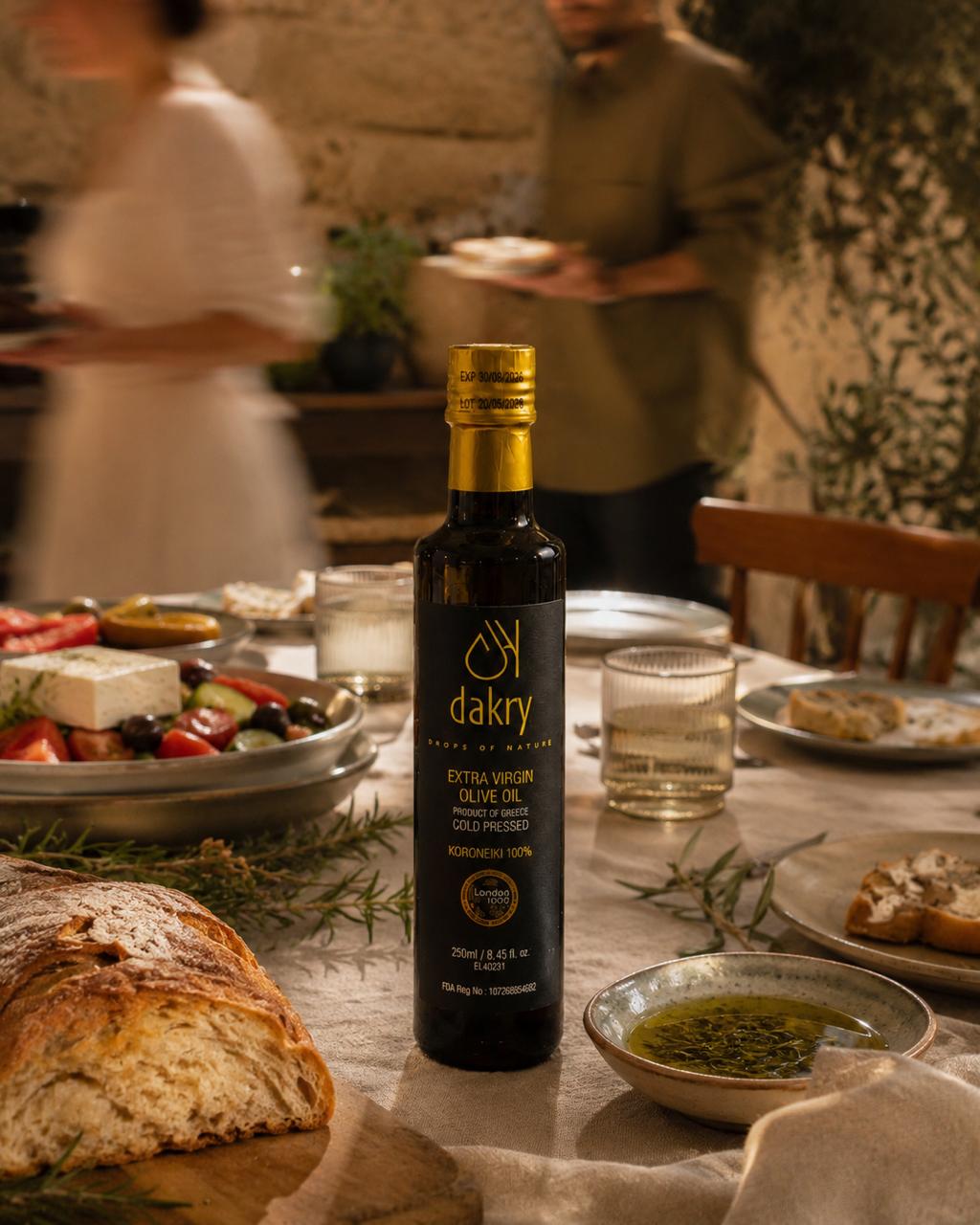
Dakry describes its Messinian EVOO with fresh vegetal notes, balanced bitterness and a pleasantly peppery finish. The unfiltered high phenolic expression is designed to show this character especially clearly.
The Famous Olive Oil Cough
Why can good olive oil make you cough?
The irritation arrives late
Unlike chilli, which can feel hot throughout the mouth, oleocanthal is strongly associated with the throat. The sensation may appear after swallowing.
Not everyone feels it equally
Research shows wide individual variation in how strongly people perceive oleocanthal irritation.
Pungency should still feel clean
A peppery throat sensation is different from rancid, musty or otherwise defective flavours. Quality tasting looks at the whole sensory profile.
Taste It Like a Professional
How to taste extra virgin olive oil at home
1. Pour a small amount into a clean glass.
2. Cup the glass in your hand for a minute to gently warm the oil and release aromas.
3. Smell first. Look for fresh fruit, herbs, leaves, artichoke, tomato, almond or other clean plant aromas.
4. Take a small sip and spread it through the mouth.
5. Draw in a little air through the teeth. Notice fruitiness, bitterness and pungency.
6. Swallow and wait. This is when the peppery sensation often becomes clearest at the back of the throat.
A professional tasting cup is usually opaque because colour is not considered a reliable indicator of olive oil quality.
Freshness Changes Everything
Why harvest, processing and storage matter
The sensory intensity of extra virgin olive oil is shaped long before the bottle reaches the table. Cultivar, olive maturity, growing conditions and production methods can influence phenolic content and flavour.
Storage matters too. Light, heat and oxygen accelerate deterioration, gradually softening fresh aromas and changing the oil's sensory profile. Keep olive oil tightly closed and away from direct sunlight and excessive heat.
If you want to experience a more intense expression, explore Dakry Unfiltered High Phenolic Extra Virgin Olive Oil or view the full Dakry olive oil collection.
Further Reading
The science behind the peppery sensation
Researchers have studied oleocanthal because its sensory behaviour is unusual. A peer reviewed human study found that its irritation is concentrated in the oropharyngeal region, while later work linked this unusual pungency to the TRPA1 sensory receptor.
Read the sensory characterisation study and the TRPA1 research on olive oil pungency.
FAQ
Frequently asked questions about olive oil throat burn
Why does extra virgin olive oil burn my throat?
Phenolic compounds, especially oleocanthal, can create a peppery irritation concentrated at the back of the throat.
Is throat burn a sign of good olive oil?
Pungency is a recognised positive sensory attribute, but it is not a standalone guarantee of quality. Extra virgin classification depends on multiple chemical and sensory criteria.
Why does olive oil make me cough?
Oleocanthal can strongly stimulate the throat after swallowing. Some people perceive this more intensely than others.
Does all extra virgin olive oil burn the throat?
No. Pungency varies according to cultivar, ripeness, phenolic composition, production and age, and individual sensitivity also differs.
Does peppery olive oil mean it is high in polyphenols?
A peppery sensation can be associated with phenolic compounds, but sensory intensity alone cannot precisely measure total polyphenol content.
Taste the Character
Discover the peppery side of Greek extra virgin olive oil.
Explore Dakry's EVOO collection from Methoni, Messinia, including the unfiltered high phenolic expression.
Explore Extra Virgin Olive Oil